
Can you really say goodbye to sciatic nerve pain in just 10 minutes with this natural method? If sharp, burning or electric pain is traveling from your lower back or buttock into your leg, even a few minutes of relief can sound appealing.
The realistic answer, however, is important: there is no natural exercise or stretch that can guarantee a permanent cure for sciatica in 10 minutes. A short session of gentle movement may ease stiffness or discomfort for some people, but sciatica is usually caused by irritation or compression of nerve roots in the lower spine. The underlying problem often needs considerably more time to settle.
Mayo Clinic says sciatica associated with a herniated disk can improve over several weeks to months, while Cleveland Clinic notes that many cases improve within roughly four to six weeks.
That does not mean a 10-minute routine is useless. Gentle movement is commonly recommended as part of sciatica self-care. The key is knowing which movements may help, when to stop and when symptoms require medical attention rather than another stretch.
Sciatic Nerve Pain at a Glance
| Question | Quick answer |
|---|---|
| What is sciatica? | Pain and other symptoms caused by irritation or compression affecting nerve roots that form the sciatic nerve |
| Where is the pain felt? | Often from the lower back or buttock down the back or side of one leg |
| Can it cause numbness? | Yes, tingling, numbness or weakness may occur |
| Can 10 minutes cure it? | No guaranteed 10-minute cure exists |
| Can gentle movement help? | It may help some people manage symptoms |
| Should you stay in bed? | Prolonged inactivity is generally discouraged |
| Common causes | Herniated disk, spinal stenosis, spondylolisthesis or back injury |
| Typical recovery | Many cases improve over several weeks |
| When is it urgent? | New bladder/bowel problems, saddle numbness or severe/worsening weakness need urgent assessment |
What Is Sciatica?
Sciatica is not a disease by itself. It describes symptoms related to irritation or compression of nerve roots that contribute to the sciatic nerve.
The sciatic nerve runs from the lower back region through the buttocks and down the legs. When one of the nerve roots associated with it becomes irritated, pain can travel along that pathway.
Mayo Clinic explains that sciatica most commonly develops when a herniated disk or an overgrowth of bone puts pressure on nerve roots in the lumbar spine.
This is why simply massaging the painful part of your calf or soaking your feet does not necessarily address the source of the problem. The irritation may originate much higher in the spine.
What Does Sciatic Nerve Pain Feel Like?
Sciatica does not feel exactly the same for everyone.
Some people experience a mild ache. Others describe burning, shooting or electric-shock-like pain. Symptoms often travel from the lower back into the buttock, thigh, calf or foot.
Numbness, tingling and muscle weakness can also occur. Sciatica usually affects one side, although certain serious conditions can produce symptoms on both sides.
Pain may become more noticeable after prolonged sitting. Some people also notice increased discomfort when coughing or sneezing.
What Causes Sciatica?
A herniated or slipped disk is one of the most common causes. A disk between the bones of the spine can bulge or rupture and irritate a nearby nerve root.
Other possible causes include spinal stenosis, where the spaces through which nerves pass become narrower, and spondylolisthesis, where one spinal bone moves out of its normal position. Back injuries may also trigger sciatic symptoms.
Because different structural problems can produce similar symptoms, one stretch cannot be assumed to work for every person with sciatica.
That point is missing from many articles promising instant sciatic nerve pain relief.
The 10-Minute Natural Method for Sciatic Nerve Pain Relief
The natural method discussed here is not a miracle ingredient, supplement or foot soak. It is 10 minutes of gentle, controlled movement based on movements commonly used in conservative sciatica care.
NHS guidance encourages people with sciatica to remain active, begin gentle exercise when possible and avoid spending long periods sitting or lying down. NICE similarly recommends encouraging normal activity and tailoring exercise to the person’s needs and abilities.
The goal of this routine is simple: move comfortably without forcing the irritated area.
Before You Begin
Do not push through sharp or rapidly increasing pain. A stretch should not cause worsening numbness, weakness or increasingly intense pain farther down the leg.
If a movement makes your symptoms noticeably worse, stop that movement.
People with severe symptoms, recent trauma, significant weakness, balance problems, pregnancy, osteoporosis, recent surgery or another diagnosed spinal condition should get individualized advice from a qualified healthcare professional before starting a new exercise routine.
Minutes 0 to 2: Easy Walking
Begin with two minutes of comfortable walking.
Walk around the room, along a hallway or outdoors if you feel stable. Keep your pace easy. The purpose is not exercise intensity. You are simply getting your body moving after sitting or resting.
If normal walking significantly increases your leg pain, do not force yourself to complete the two minutes.
Movement matters because prolonged inactivity can contribute to stiffness. NHS guidance specifically recommends continuing normal activities as much as possible and starting gentle movement when tolerated.
Minutes 2 to 4: Gentle Cat-Cow Movement
Move onto your hands and knees if getting onto the floor is comfortable.
Position your hands roughly below your shoulders and your knees below your hips. Slowly allow your back to move into a gentle arch. Then slowly round your back in the opposite direction.
Move with your breathing rather than forcing yourself into the largest possible range.
Complete a few controlled repetitions.
Harvard Health includes cat-cow among gentle movements that may be useful for sciatica and advises avoiding overexertion or excessive bending.
If the position increases pain traveling into your leg, stop.
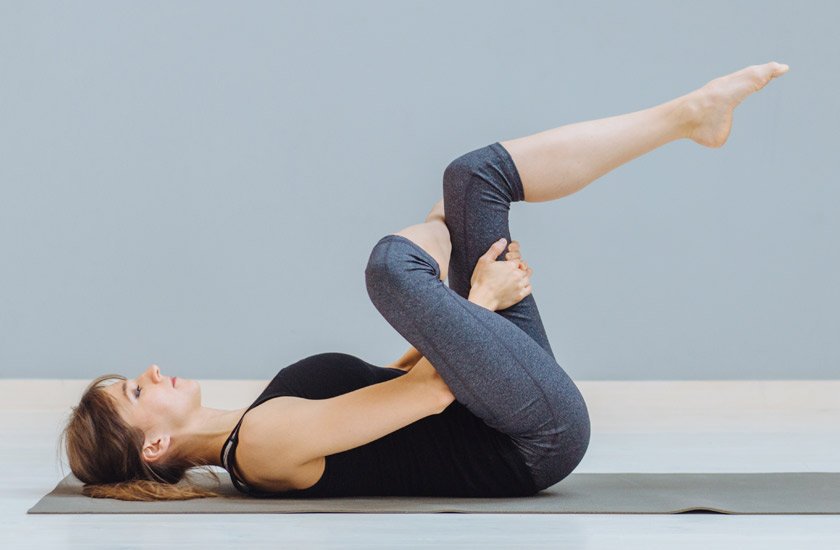
Minutes 4 to 6: Gentle Knee-to-Chest Stretch
Lie on your back with your knees comfortably bent.
Slowly bring one knee toward your chest until you feel a mild stretch. Avoid pulling aggressively. Return the leg to the starting position and repeat gently on the other side.
Cleveland Clinic includes knee-to-chest among exercises used for sciatica, while Harvard emphasizes that stretches should remain slow and controlled.
More stretching is not automatically better. If bringing your knee toward your chest increases radiating symptoms, skip this exercise.
Minutes 6 to 8: Lower-Back Press
Remain on your back with your knees bent and feet resting on the floor.
Gently flatten your lower back toward the floor. Hold briefly, relax and repeat without straining.
This is a small movement rather than an intense abdominal exercise.
Harvard Health includes the lower-back press in its gentle sciatica exercise guidance.
Again, symptom response matters more than completing a fixed number of repetitions.
Minutes 8 to 10: Easy Walking and Reassessment
Finish with another two minutes of relaxed walking.
Then ask yourself a more useful question than “Is my sciatica cured?”
Ask: “Are my symptoms the same, slightly easier or worse than they were 10 minutes ago?”
If movement feels easier or discomfort has settled, the routine may be a useful short self-management option for you.
If symptoms become sharper, travel farther down the leg, or are accompanied by new numbness or weakness, stop experimenting with exercises and seek professional advice.
Can You Really Say Goodbye to Sciatic Nerve Pain in Just 10 Minutes?
This is where many online headlines become misleading.
A 10-minute session may help manage symptoms, but it cannot reliably remove a herniated disk, reverse significant spinal stenosis or guarantee that an irritated nerve root is fully recovered.
Cleveland Clinic reports that many cases improve within four to six weeks without medical treatment, although more serious cases may take longer. Mayo Clinic similarly describes recovery from disk-related sciatica as occurring over weeks to months.
Therefore, “10-minute sciatica relief” should be understood as a short self-care routine, not a promise that the underlying cause disappears in 10 minutes.
Where Competing 10-Minute Sciatica Articles Fall Short
Many articles targeting the phrase say goodbye to sciatic nerve pain in just 10 minutes with this natural method have a useful idea at their core: gentle movement can be part of sciatica management.
However, several common weaknesses reduce their usefulness.
First, some headlines blur the difference between temporary symptom relief and a cure. A person may feel looser after stretching without the underlying nerve irritation being resolved.
Second, many routines use the same stretches for everyone. Sciatica can have different causes, so a movement that feels comfortable for one person may worsen symptoms for someone else.
Third, several articles focus heavily on stretching while giving little attention to remaining active throughout the day. NHS and NICE guidance both emphasize activity and self-management.
Fourth, some pages fail to give enough attention to neurological warning signs. This is particularly important because sciatica can occasionally occur alongside conditions requiring urgent medical treatment.
Finally, miracle-style natural remedies may sound attractive but should not be presented as proven ways of removing nerve compression unless credible clinical evidence supports the claim.
A helpful article should tell readers both what they can try and when they should stop trying to manage the problem by themselves.
Should You Stretch a Sciatic Nerve?
Gentle stretching can be useful for some people, but aggressive stretching is different.
Harvard Health advises slow, controlled movement and warns against overexertion, deep stretching and sharp twisting movements during active sciatica.
The objective is not to “stretch the sciatic nerve as hard as possible.”
Instead, use comfortable movements around the hips and lower back while paying attention to changes in your symptoms.
If a stretch produces sharp pain or makes pain spread farther down your leg, stop.
What Exercises Should You Avoid With Sciatica?
There is no universal forbidden exercise list because tolerance depends on the cause and severity of symptoms.
During a painful flare, however, aggressive stretching, heavy lifting and forceful twisting may aggravate symptoms. Harvard advises caution with heavy lifting, twisting movements and intense stretching while sciatica is active.
Do not assume that discomfort means an exercise is “working.” Nerve-related pain should not be treated like the normal muscular discomfort of a workout.
Is Walking Good for Sciatica?
For many people, gentle walking is a practical way to keep moving.
Both NHS and NICE guidance encourage continued normal activity when possible rather than prolonged inactivity.
However, walking tolerance varies. Spinal stenosis, for example, can produce symptoms that become worse during prolonged standing or walking.
Start with a comfortable amount rather than forcing a particular distance or step count.
Heat or Ice: Which Is Better for Sciatica?
Heat and cold are commonly used as self-care options.
The NHS suggests heat packs for painful areas. Harvard Health describes cold as one option during the early phase of symptoms and heat as another option as pain begins to settle. Heat may also make gentle movement more comfortable by relaxing tense muscles.
Always protect your skin with a barrier rather than placing extreme heat or ice directly against it.
Neither heat nor cold should be described as a treatment that permanently removes the underlying cause of sciatica.
Why Staying in Bed Can Be a Mistake
Pain naturally makes people want to avoid movement.
For sciatica, however, prolonged bed rest is generally not recommended. NHS advice says people should avoid sitting or lying down for long periods and should continue normal activities as much as possible.
That does not mean ignoring severe pain.
Instead, balance short periods of rest with comfortable movement and gradually return to everyday activity as symptoms allow.
Can Posture Affect Sciatica?
Long periods of sitting can aggravate symptoms for some people.
Mayo Clinic lists prolonged sitting among factors associated with disk problems and advises good sitting posture as part of protecting the back.
If your work keeps you at a desk, change position regularly rather than expecting one “perfect” posture to solve the problem.
Taking short walking breaks may also be more practical than remaining in the same position for hours.
How Long Does Sciatica Last?
There is no single recovery time.
Cleveland Clinic says many cases improve within four to six weeks, while more severe cases can persist for weeks or months. Mayo Clinic also notes that sciatica caused by a herniated disk can improve within several weeks to months.
The cause, severity of nerve irritation, physical health and treatment approach can all influence recovery.
This is another reason a “10-minute cure” should not be taken literally.
When Should You See a Doctor?
Arrange a medical assessment when sciatica is getting worse, prevents normal activity or does not begin improving after a period of self-care.
Mayo Clinic advises contacting a healthcare professional if self-care does not ease symptoms or if the pain is severe or worsening. NHS guidance advises seeking medical help if home treatment has not helped after a few weeks, symptoms are worsening or pain is stopping normal activities.
A clinician may recommend physiotherapy or another treatment depending on the suspected cause.
Sciatica Warning Signs You Should Not Ignore
Get urgent medical help rather than trying another 10-minute exercise routine if you develop:
- New problems controlling your bladder or bowel, difficulty starting urination, numbness around the genitals or anus, severe or worsening weakness or numbness in both legs, sciatica affecting both sides with neurological symptoms, or severe symptoms after major trauma.
These can indicate a serious spinal problem that requires urgent assessment.
What If Home Treatment Does Not Work?
Persistent sciatica does not necessarily mean you need surgery.
Depending on the cause and severity, treatment can include individualized physical therapy and other medical approaches. Mayo Clinic notes that physical therapy may include work on posture, core strength and range of motion. More invasive treatment is generally considered when conservative approaches are inadequate or serious neurological problems are present.
NICE also recommends tailoring management to the person’s needs and capabilities rather than using the same treatment package for everyone.
How Can You Reduce the Chance of Sciatica Returning?
Not every episode can be prevented.
However, regular physical activity, appropriate lifting technique and reducing long periods of inactivity may help support back health. NHS guidance recommends staying active, using safe lifting technique and maintaining good posture. Mayo Clinic similarly recommends regular exercise, sensible lifting and supportive sitting posture.
Long-term prevention is therefore less about finding one miracle stretch and more about maintaining comfortable, regular movement.
FAQ
You may experience temporary relief after 10 minutes of gentle movement, but no exercise can guarantee that sciatica will permanently disappear in 10 minutes. Many cases recover over several weeks rather than minutes.
There is no universally fastest method. Gentle movement, comfortable stretching, avoiding prolonged inactivity and using heat or cold appropriately may help some people manage symptoms. The best approach depends on what is causing the sciatica.
Gentle stretching may help some people, but aggressive stretching can make symptoms worse. Stretch slowly and stop if pain becomes sharper or symptoms worsen.
Gentle walking may help you remain active and avoid prolonged inactivity. However, walking should stay within your comfortable tolerance because some causes of sciatica can make prolonged walking painful.
Heat may help some people feel more comfortable, and the NHS includes heat packs among self-care measures for sciatica. Protect your skin and avoid excessive temperatures.
Prolonged bed rest is generally discouraged. Staying reasonably active and returning to normal activity as tolerated are commonly recommended.
Many cases improve without surgery. Cleveland Clinic reports that many people improve within four to six weeks, although recovery depends on the cause and severity.
This varies between individuals. Prolonged sitting, forceful twisting, heavy lifting or overly aggressive stretching may aggravate symptoms in some people.
Seek urgent medical attention for bowel or bladder control problems, numbness around the genital or anal area, or severe or worsening neurological symptoms such as significant leg weakness.
Final Thoughts
The promise to say goodbye to sciatic nerve pain in just 10 minutes with this natural method is appealing, but it needs a realistic explanation.
Ten minutes of gentle walking and carefully selected movement may help some people feel less stiff or more comfortable. It should not be presented as a guaranteed cure for nerve compression.
The more useful approach is to stay gently active, avoid movements that clearly worsen symptoms, pay attention to neurological warning signs and seek professional care when the problem is severe, worsening or persistent.
That may not sound as dramatic as a miracle cure, but it gives people with sciatica something far more valuable: safe, practical and realistic guidance.